
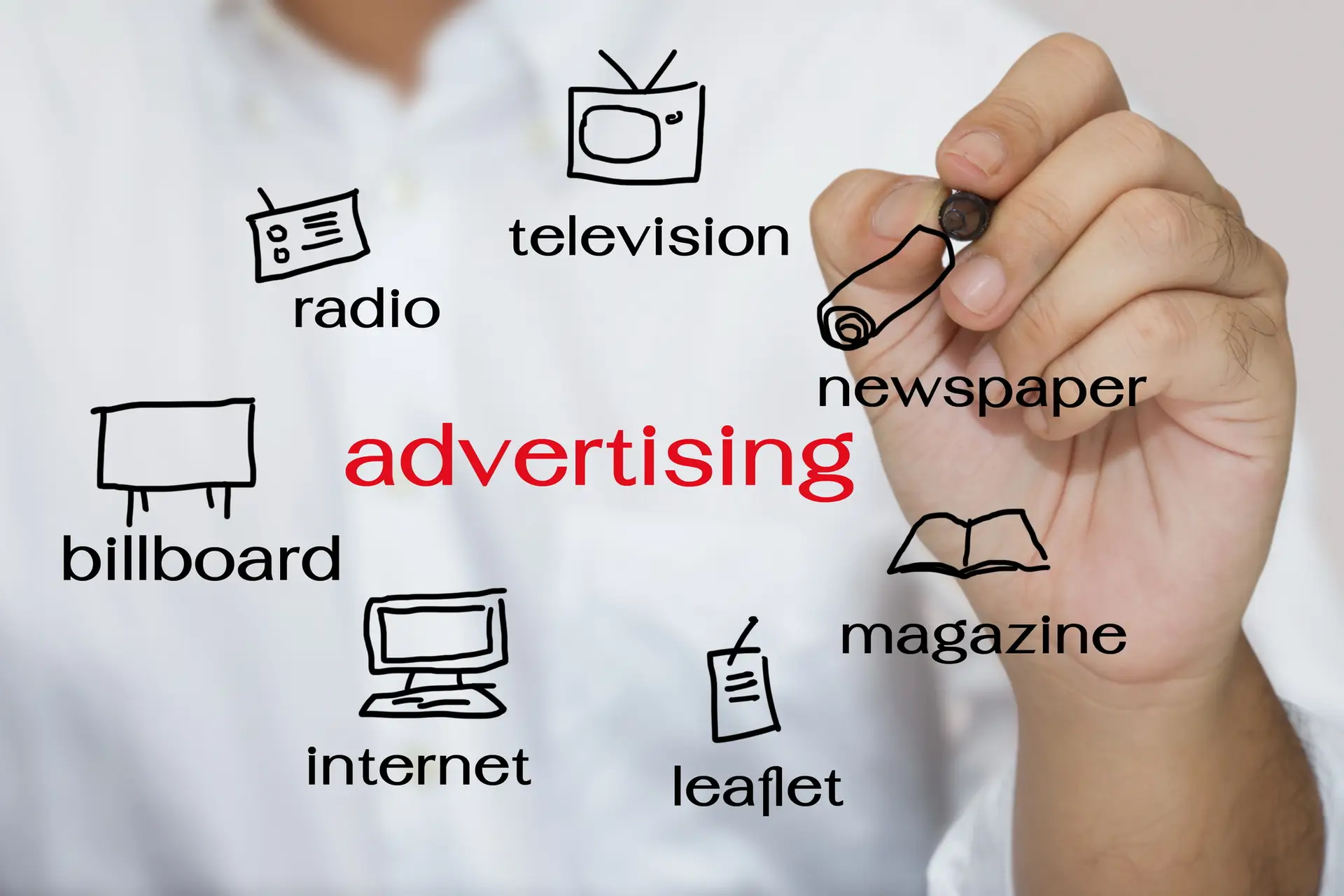
Media buying and planning is how your advertising budget turns into actual results. For Denver business owners spending money on TV, radio, digital, or outdoor advertising, it’s the process of figuring out where your ads should run, when they should run, how often people need to see them, and what you should pay. Get it right, and your business gets in front of the right people at the right time. Get it wrong, and you burn through cash with nothing to show for it.
If you’ve been quoted CPMs and GRPs by a media sales rep and had no idea what they meant, this guide is for you. We’ll break down the terms that directly affect your ad spend, cover the modern digital terms you’ll hear in 2026, and show you the red flags that signal your media buy is underperforming.
Here are the terms that matter most:
Same budget. More than double the spots. More than double the frequency. Lower cost per point by 58%. That’s what happens when a media buyer negotiates on your behalf instead of buying at the rates a station rep quotes you.
The difference comes from knowing what to negotiate, when to push back on rates, and how to package buys across stations for better pricing. Station reps work for the station. A media buyer works for you.
When planning and buying are disconnected, or when a business owner handles buying without a plan, money gets scattered across the wrong channels and dayparts.
3. Your digital and traditional campaigns don’t talk to each other.
If your radio campaign says one thing and your digital ads say another, or if there’s no coordination on timing and targeting, you’re splitting your impact. Modern media plans coordinate messaging across all channels so each impression reinforces the others.
4. You can’t tell which channel is driving results.
“We think the radio is working” isn’t measurement. If you don’t have call tracking, unique landing pages, or attribution in place, you’re spending blind. Every channel in your media mix should have a way to track performance.
5. You’re measuring impressions instead of actions.
Impressions tell you how many times your ad was displayed. They don’t tell you if anyone cared. A recent industry analysis found that $63 billion in global ad spend was wasted on invalid traffic in 2025 alone. Focus on metrics that connect to revenue: phone calls, form fills, store visits, sales.
Creative Options Marketing is a Denver-based digital marketing agency founded in 2009. We help businesses across Denver, Boulder, Colorado Springs, Aurora, and Fort Collins grow through media buying, SEO, and data-driven digital marketing. Want a second opinion on your current media plan? Get in touch and let’s talk about your advertising.
What You’ll Learn
- The traditional and digital media buying terms that directly affect what you pay. Definitions written for business owners, not marketing professionals.
- How media planning and buying work together. And what happens to your budget when they don’t.
- 5 warning signs your current media buy isn’t performing. What to watch for before you renew.
- Why Denver’s media market requires local expertise. National agencies miss the details that affect your rates.
- A real before-and-after case study. How smart buying cut a client’s cost per point by 58% on the same budget.
What Is Media Buying and Planning?
Media planning and media buying are two distinct steps that work together. They often get lumped together, but they involve different skills. Media planning is the strategy side. A media planner researches your target audience, figures out which channels will reach them (TV, radio, digital, outdoor, print), sets the budget, and builds a schedule. The plan answers three questions: Who are we talking to? Where do they spend their attention? How much will it cost to reach them often enough to matter? Media buying is the execution side. A media buyer takes that plan and negotiates the actual ad placements. They purchase airtime, ad space, or digital inventory, then monitor performance and make adjustments. Think of it this way: the planner draws the blueprint, the buyer builds the house. These roles sometimes overlap, especially at smaller agencies. But the distinction matters because planning without smart buying wastes money on the wrong placements. And buying without solid planning means you’re negotiating in the dark. Denver is the 17th largest DMA (Designated Market Area) in the country (Source: Nielsen 2024-2025 Local Television Market Universe Estimates). That means local TV, radio, and outdoor advertising here reach a significant audience, but the rates and competition reflect that market size. Knowing the terminology helps you evaluate if you’re getting a fair deal. If you’d rather have someone walk you through this for your specific situation, we do that.Traditional Media Buying Terms That Affect Your Budget
These are the terms media sales reps and agency buyers use every day. You don’t need to memorize all of them, but knowing what they mean protects your budget.Audience Measurement Terms
| Term | What It Means | Why You Care |
|---|---|---|
| Rating | The percentage of the total population exposed to a program or ad. One rating point equals 1% of the market. | A higher rating costs more. Make sure you’re paying for ratings within YOUR target demographic, not the general population. |
| GRP (Gross Rating Points) | The total of all ratings in your ad schedule. If you run 10 spots each with a 5 rating, that’s 50 GRPs. | GRPs tell you the weight of your campaign. More GRPs means more exposure, but they include duplication (the same person seeing your ad multiple times). |
| Impression | One single exposure of your ad to one person. Usually expressed in thousands. | Impressions count every eyeball, including repeats. 10,000 impressions doesn’t mean 10,000 different people saw your ad. |
| Reach | The percentage of different people who see your ad at least once during a campaign. Unduplicated. | This is the number that tells you how wide your net is. If your reach is 40%, four out of ten people in the market saw your ad at least once. |
| Frequency | The average number of times each person in your target audience sees your ad. | Most advertising research suggests you need a frequency of 3 or higher before your message sticks. Below that, you’re spending money without making an impression. |
| DMA (Designated Market Area) | Nielsen’s geographic boundaries for TV and radio markets. Denver’s DMA covers a specific set of counties. | Your DMA determines which stations and rates apply to your market. Ads bought in the Denver DMA won’t reach Colorado Springs, which is a separate DMA. |
Cost Terms
| Term | What It Means | Why You Care |
|---|---|---|
| CPM (Cost Per Thousand) | The cost to reach 1,000 people with your ad. | This is the standard comparison metric across all media. A $25 CPM on radio vs. a $15 CPM on digital doesn’t mean digital is cheaper. You need to compare CPMs within the same target audience. |
| CPP (Cost Per Point) | The cost of buying one rating point in your market. | CPP lets you compare the cost of reaching the same audience percentage across different stations or programs. |
| Net Cost | The rate you pay before agency commission. | If you buy direct, you pay net. If you use an agency, they typically add 15% commission on top of net. |
| Gross Cost | The rate including agency commission. | This is the total invoice amount. For example, a $100 gross spot breaks down to $85 going to the station and $15 to the agency. |
Scheduling and Placement Terms
| Term | What It Means | Why You Care |
|---|---|---|
| Daypart | Time segments that divide the broadcast day (morning, midday, afternoon drive, prime time, late night). | Different dayparts have different audiences and costs. A restaurant buying lunch-hour radio hits a different crowd than prime time TV. |
| Drive Time | Radio’s highest-rated dayparts: M-F 6am-10am and 3pm-7pm. | Drive time commands premium rates because listenership peaks when people commute. In Denver, with I-25 traffic, drive time radio is competitive. |
| ROS (Run of Schedule) | Your ad runs whenever the station has open time, no specific daypart guaranteed. | ROS is cheaper but you lose control over when your ad airs. A 2am spot costs less for a reason. |
| Avails | Available unsold ad inventory. | When a rep sends you “avails,” they’re showing you what’s open for purchase. Limited avails in a popular daypart means higher prices. |
| Pre-emption | When a higher-paying advertiser bumps your ad from its scheduled slot. | If you bought preemptible time (lower rate), your spot can get replaced. Ask if your buy is fixed or preemptible before signing. |
| Make-good | A replacement spot offered when your original ad didn’t run correctly or was preempted. | Always confirm make-good policies in writing. A make-good at 2am doesn’t replace a drive-time spot you paid for. |
| Flight Dates | The start and end dates of your campaign. | Flighting your ads (running them in bursts rather than continuously) can stretch a smaller budget further. |
Print and Outdoor Terms
| Term | What It Means | Why You Care |
|---|---|---|
| Circulation | Total copies of a publication distributed. | Circulation doesn’t equal readership. One newspaper might be read by 2-3 people per copy. |
| Showing | A package of outdoor billboard locations that delivers a certain percentage of market coverage, typically sold as #25 or #50 showings. | A #50 showing means your boards will be seen by roughly 50% of the market population daily. |
| DEC (Daily Effective Circulation) | The average number of people in vehicles passing an outdoor display. | DEC tells you the traffic count, but not everyone passing actually notices the board. |
| EOIs (Eyes On Impressions) | The estimated number of people likely to actually notice an outdoor ad. Reported weekly. | EOIs are more realistic than DEC because they account for the fact that not every driver looks at every billboard. |
Digital and Programmatic Terms You’ll Hear in 2026
The media buying industry has changed fast. Programmatic advertising now accounts for roughly 90% of all digital display ad spending in the US, according to eMarketer. If your media plan doesn’t include digital, you’re missing most of the playing field.📊 DATA POINT: Programmatic ad buying now represents roughly 90% of all US digital display spending. If you’re still negotiating every digital placement manually, you’re working harder and paying more than you need to.
| Term | What It Means | Why You Care |
|---|---|---|
| Programmatic | Automated buying and selling of digital ad space using software instead of human negotiation. | Most digital ads are now bought this way. It’s faster and allows more precise targeting, but it also means you need someone who understands the platforms. |
| CTV/OTT | Connected TV (smart TVs, Roku, Apple TV) and Over-The-Top content (streaming services like Hulu, Peacock). | CTV lets you run TV-style ads to streaming audiences with digital-level targeting. You can target by zip code, household income, or viewing habits. Many digital marketing agencies in Denver now offer CTV buying as a core service. |
| ROAS (Return on Ad Spend) | Revenue generated divided by ad spend. A 5:1 ROAS means $5 in revenue for every $1 spent. | This is the number that actually tells you if your advertising is working. Impressions and clicks are activity metrics. ROAS is a results metric. |
| CPA (Cost Per Acquisition) | The total cost to acquire one new customer through advertising. | CPA includes your entire ad spend divided by new customers gained. If you spent $5,000 and got 20 new customers, your CPA is $250. Is that worth it? Depends on your customer lifetime value. |
| Retargeting | Showing ads to people who already visited your website or interacted with your brand. | Retargeted ads are significantly more effective than cold prospecting ads. They remind people who already showed interest. |
| First-Party Data | Information you collect directly from your customers (email lists, purchase history, website behavior). | With third-party cookies going away, first-party data is becoming the most valuable targeting asset you own. |
| Attribution | Figuring out which ad or channel actually caused someone to buy. | Without attribution, you can’t tell if your radio ad or your Google ad drove the phone call. Multi-touch attribution gives credit to every touchpoint, not just the last click. |
| Frequency Capping | Setting a limit on how many times one person sees your digital ad. | Without a cap, you waste money showing the same person your ad 50 times. Caps prevent budget waste and audience fatigue. |
| Geotargeting | Showing digital ads only to people in a specific geographic area. | For Denver businesses, geotargeting lets you focus spend on your actual service area instead of paying to reach someone in Pueblo who will never visit. |
How Media Buying and Planning Work Together in Denver
Here’s what the process looks like when it’s done right: Step 1: Research. The planner studies your target customer. Where do they consume media? What are their habits? In Denver, that might mean heavy podcast listening among 25-40 year olds, strong local radio habits during I-25 commutes, and high streaming adoption. A good Denver marketing agency will conduct this research before recommending channels. Step 2: Strategy. Based on research, the planner recommends a media mix. Maybe it’s 40% digital (programmatic display + CTV), 30% radio (drive time on two stations), and 30% outdoor (billboards on I-25 and Colorado Blvd). Each channel has a job in the mix. Step 3: Negotiation. The buyer reaches out to media vendors, reviews avails, negotiates rates, and secures placements. A skilled buyer knows that rate card prices are starting points, not final offers. They also negotiate added value like bonus spots, digital extensions, or sponsorship mentions. Step 4: Execution and Optimization. Ads go live. The buyer monitors performance, watches for pre-emptions, confirms make-goods, and shifts budget toward what’s working. On the digital side, this happens in real time.What This Looks Like in Practice
Here’s a real example. A client was buying radio directly from station reps, targeting women 35-54 in a market with 885,600 people in that demographic. Their schedule had 290 total spots across two stations at a cost-per-point of $234.31. After Creative Options took over the media buying (with the same total budget of ~$28,000), the results changed:| Metric | Before Creative Options | After Creative Options |
|---|---|---|
| Total Spots | 290 | 605 |
| Frequency | 8.5 | 18.0 |
| Net Reach | 124,400 | 140,600 |
| Cost Per Point | $234.31 | $98.69 |
| Total Cost | $28,000 | $28,175 |
5 Red Flags Your Media Buy Isn’t Working
You don’t need to be a media expert to spot problems. Here’s what to watch for: 1. Your rep can’t show you reach and frequency numbers. If someone selling you ad time can’t tell you how many different people your campaign reaches and how often they see it, they’re selling you spots, not results. Reach and frequency are the foundation of any media buy. Without them, you’re guessing. 2. You’re paying rate card prices. Nobody pays rate card. It’s a starting point for negotiation, like an MSRP on a car. If you’re buying directly from stations without negotiating or without an agency negotiating for you, you’re likely overpaying by 20-40%. Also worth knowing: many station reps are paid on volume, so they have no incentive to tell you when your campaign has hit diminishing returns and more spend won’t produce more results.⚠️ REALITY CHECK: Station reps work on commission. Their job is to sell you more spots. A media buyer’s job is to get you better results. Those are different incentives, and they produce different recommendations.
📊 DATA POINT: According to MediaPost, $63 billion in global ad spend was wasted on invalid traffic in 2025. That’s money spent on bot clicks and fake impressions that never reached a real person.
Why Denver Businesses Need a Local Media Buying Partner
Denver’s media market has specific dynamics that national guides won’t cover. The Denver DMA is the 17th largest in the country (Source: Nielsen), which puts it in a sweet spot. It’s large enough to have competitive rates and professional-grade stations, but not so large that small and mid-size businesses get priced out. That said, rates have increased as Denver’s population has grown, and competition for premium placements has tightened. A local media buying agency knows which Denver radio stations over-index with your target demographic. They know which billboards along I-25 actually perform versus which ones drivers ignore. Experienced media buyers and planners know the seasonal patterns, like how outdoor advertising rates spike before ski season and how restaurant advertising shifts around Broncos games and concert season at Red Rocks. They also have relationships with local media vendors. Those relationships translate into better rates, better placement, and better make-good policies when something goes wrong.How Data Changes the Buying Decision
Here’s another example. Using audience segmentation data, we found that a client’s target audience was 2.42 times more likely to listen to news radio than the general population, with a CPP of $105. But they were also 2.25 times more likely to listen to classical radio, where the CPP was only $50. By shifting part of the buy from news to classical radio, the client saved 10.7% on their media spend while reaching the same target audience. That kind of analysis only comes from having the data and knowing how to read it. National agencies and DIY media buys miss these details. And those details are often the difference between a campaign that works and one that just runs.Frequently Asked Questions About Media Buying and Planning
What is media buying and planning?
Media buying and planning is the two-step process of creating an advertising strategy (planning) and then purchasing the ad space to execute it (buying). Planning determines who you’re targeting, which channels to use, and how much to spend. Buying handles the negotiation, placement, and optimization of your ads across those channels.How much does media buying cost for a small business in Denver?
It depends on your goals and channels. A small radio campaign in the Denver DMA might start at $2,000-5,000 per month. Digital campaigns can start lower. The real cost factor is your media buying partner’s ability to negotiate rates and avoid waste. A poorly targeted $10,000 campaign will produce less than a well-planned $5,000 one.What’s the difference between CPM and CPP?
CPM (Cost Per Thousand) measures the cost to reach 1,000 people. CPP (Cost Per Point) measures the cost to reach 1% of your target market. CPP is used more in broadcast media buying, while CPM is the standard for digital. Both help you compare the cost of reaching audiences across different media.Should I buy media directly or use an agency?
Buying direct saves you the agency commission (typically 15%), but agencies negotiate lower base rates because of their buying volume and vendor relationships. In most cases, the savings from better negotiation and strategic planning more than offset the commission. Agencies also handle the monitoring, optimization, and make-goods that eat up your time.What is programmatic advertising?
Programmatic advertising uses automated software to buy digital ad space in real time, often through an auction process. Instead of calling a website to negotiate a banner ad, software places your ad in front of specific audiences across thousands of sites in milliseconds. It now represents about 90% of digital display ad buying.How do I know if my media buy is working?
Track actions, not just impressions. Set up call tracking with unique phone numbers for each channel. Use dedicated landing pages for digital campaigns. Ask new customers how they found you. Compare cost per acquisition across channels. If you can’t connect your ad spend to specific business outcomes, your measurement needs work.What’s the difference between reach and frequency?
Reach is how many different people see your ad. Frequency is how many times each person sees it. Both matter, but frequency tends to matter more for driving action. Most research suggests a minimum frequency of 3 before your message registers. A campaign with high reach but low frequency means lots of people saw your ad once and forgot it.Creative Options Marketing is a Denver-based digital marketing agency founded in 2009. We help businesses across Denver, Boulder, Colorado Springs, Aurora, and Fort Collins grow through media buying, SEO, and data-driven digital marketing. Want a second opinion on your current media plan? Get in touch and let’s talk about your advertising.