

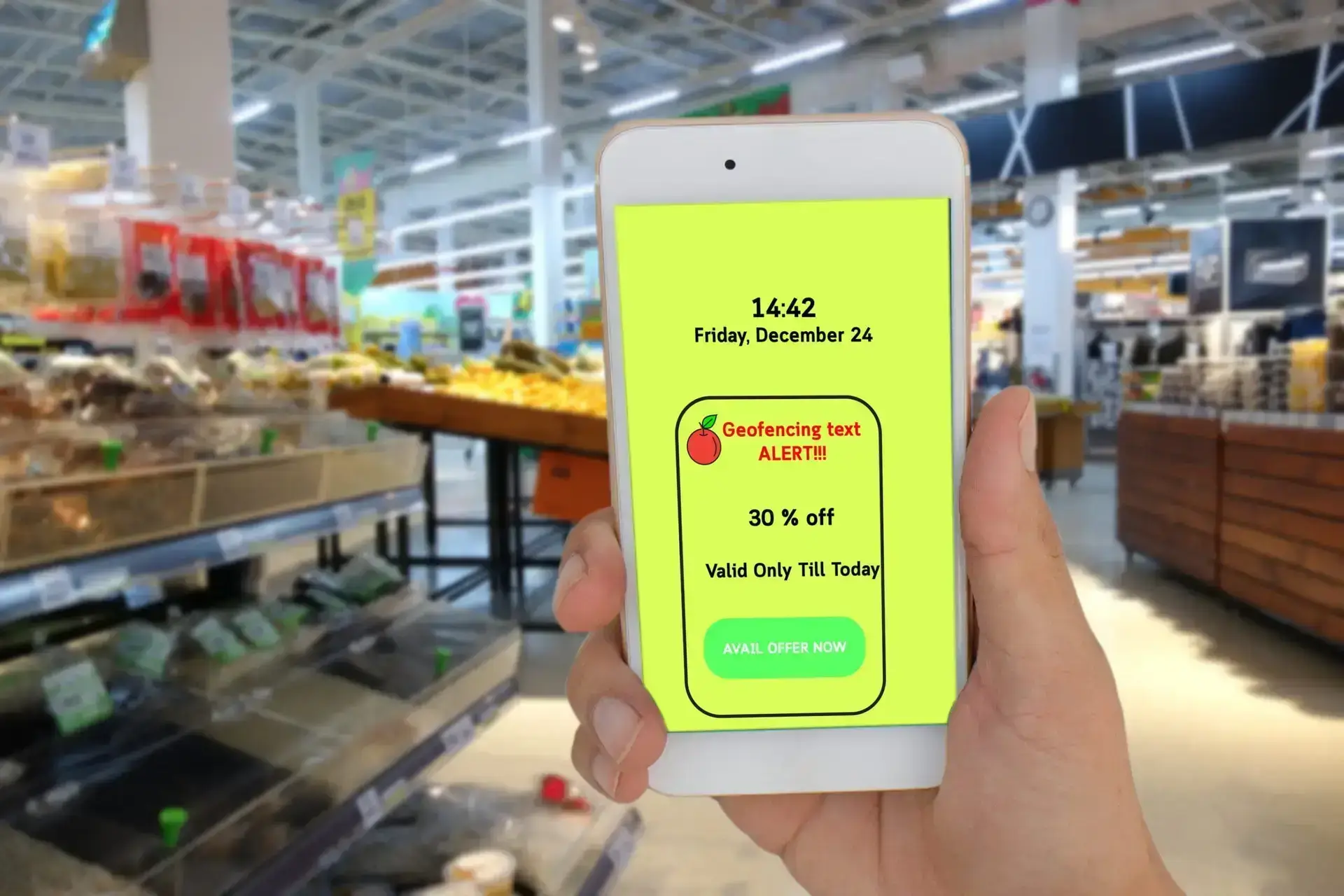
Geofencing marketing doesn't target "people in Denver." It targets the person walking into your competitor's showroom in Cherry Creek right now. By drawing a virtual boundary around a physical location, you can serve ads to mobile devices the moment they cross that line — and keep reaching them for days afterward with a lookback window. If you're evaluating geofencing companies in Denver, this guide covers how it works, what it actually costs, and where it delivers results versus where it wastes budget.
Geofencing marketing is a location-based advertising method that serves ads to mobile devices when they enter or exit a defined geographic boundary — drawn using GPS, Wi-Fi, RFID, or cellular data around a specific location. Once a device crosses the boundary, it becomes eligible to receive a targeted ad (mobile display, push notification, or video), either during the visit or for a defined period afterward.
Geofencing works for you if...
- You have a physical location customers visit
- You want to target competitor foot traffic
- Your sales cycle is days or weeks, not months
- You're running an event or time-limited promotion
- You serve a defined local Denver market
Geofencing is the wrong tool if...
- Your B2B sales cycle runs 6+ months
- Your product is fully remote with no walk-in traffic
- Target locations see fewer than 50 visitors per day
- No physical location ties to your audience
- You need national reach, not local precision
Key Takeaways
- Geofencing uses GPS, Wi-Fi, RFID, and cellular data to trigger ads when a device enters a defined boundary — active geofencing hits in real time, passive geofencing builds audiences for later targeting.
- Tight fences outperform broad ones. In dense Denver markets like LoDo and Cherry Creek, fences wider than 500–700 feet start capturing commuter traffic instead of qualified shoppers.
- The core ROI metric is conversion zone tracking — a secondary fence around your location that measures how many ad-exposed devices actually visited your store.
- CPMs in the Denver market run $3.50–$7.00 for mobile display, rising to $25–$40 for OTT/CTV. Most local campaigns budget $1,500–$5,000/month.
- Geofencing works best for high-foot-traffic, short-decision-cycle products. It's the wrong tool for B2B enterprise sales, rural markets, or products that don't benefit from proximity intent.
01 — TechnologyHow Does Geofencing Marketing Work?
When you set up a geofencing campaign, you're drawing a virtual perimeter around a physical location using one or more of four signal types: GPS (most precise, works outdoors), Wi-Fi (useful indoors and in dense urban areas), RFID (radio frequency, typically used in retail or events), and cellular network data (broadest coverage, least precise). Most platforms blend these signals for accuracy.
When a mobile device with location services enabled crosses the fence, the platform identifies it through a Mobile Advertising ID (MAID) — an anonymized device identifier used to serve ads without connecting to personal data. The device gets added to the campaign audience and ads start serving.
Two modes exist. Active geofencing serves ads in real time as the device enters the fence. Passive geofencing builds a retargeting audience from devices that visited the fenced area, then serves ads later — useful for longer consideration cycles. Most platforms also support a lookback window of 7–30 days, letting you continue reaching visitors after they've left the fenced area.
According to the IAB's location-based advertising standards, fence accuracy degrades significantly beyond 1,000 feet in most urban environments. For Denver campaigns, we recommend polygon-shaped fences (custom shapes that follow building footprints) over simple radius fences — radius fences bleed signal across streets and into adjacent properties, which inflates your audience with unqualified impressions. Learn more about the underlying technology in our guide to what is geofencing.
How a Geofence Campaign Works — 4 Steps
Active geofencing triggers ads as devices cross the fence. Passive geofencing builds a retargeting audience during the lookback window. Conversion zones measure real-world visits.
02 — ComparisonGeofencing vs. Geotargeting: What's the Difference?
These terms get used interchangeably, but they're different tools with different use cases. Understanding which one you need saves budget and prevents campaign mismatches.
| Factor | Geofencing | Geotargeting |
|---|---|---|
| Precision | Meters — specific building or lot | City, zip code, or region |
| Signal source | GPS, Wi-Fi, RFID, cellular | IP address, declared location |
| Best for | Conquest, events, foot traffic | Regional brand awareness, broad reach |
| Purchase intent signal | High — physical presence indicates intent | Low to moderate — location is approximate |
| Cost | Higher CPM, smaller audience | Lower CPM, larger audience |
| Measurement | Conversion zone tracking, visit attribution | CTR, reach, conversions via pixel |
The short version: use geofencing when physical presence at a location is your best proxy for purchase intent. Use geotargeting when you want broad reach across a metro or region and precision isn't the point.
03 — Strategy3 Geofencing Marketing Strategies That Drive Results
Strategy 01
Competitor Conquesting
Place fences around competitor locations and serve ads to their customers while they shop. Timing is the advantage — you're reaching someone in the decision window, not hours later.
Strategy 02
Event-Based Targeting
Major venues give you a concentrated, self-selected audience for a defined time window. Fence the venue during the event, capture MAIDs, then retarget attendees for 7–14 days post-event while the context is still fresh.
Strategy 03
Loyalty & Retention
Fence your own locations and serve loyalty offers or upgrade messaging to existing customers while they're in-store. Lower cost than conquest since the audience is smaller — and conversion rates are typically higher.
04 — Fit AssessmentWhen Geofencing Marketing Is the Wrong Tool
Geofencing gets oversold. Here's when it doesn't make sense for a Denver business.
Geofencing Works When...
- Your audience has a meaningful physical location signal
- Decision cycles are days or weeks, not months
- You're targeting competitor foot traffic
- Foot traffic is high enough to build an audience pool
- You serve a defined local Denver market or specific neighborhoods
- You're running events or time-sensitive promotions
Geofencing Doesn't Work When...
- B2B sales cycles run 6+ months with procurement buy-in
- Product is fully remote — no walk-in traffic component
- Target locations see fewer than 50 qualified visitors per day
- No logical physical location ties to your audience
- Outside Denver's core — foot traffic too thin to justify spend
- Fences exceed 500–700 feet — you capture commuters, not buyers
If any of these apply to your situation, geofencing probably isn't your best spend. Consider whether a stronger digital marketing strategy — search, LinkedIn, or programmatic with behavioral targeting — better matches your sales motion.
05 — BudgetWhat Does Geofencing Marketing Cost?
Geofencing runs on a CPM model — you pay per thousand impressions served. Costs vary by format, audience density, and platform. The following ranges are based on GroundTruth's published benchmarks and our experience running campaigns in the Denver market.
| Ad Format | CPM Range (Denver) | Best Use Case |
|---|---|---|
| Mobile Display | $3.50–$7.00 | Conquest, retail, events |
| Mobile Video | $15–$25 | Brand awareness, product demos |
| Audio | $12–$18 | Commuter targeting, retail |
| OTT / CTV | $25–$40 | High-intent households, retargeting |
| Push Notification | $1.00–$3.00 | App-based loyalty, in-store triggers |
A typical Denver geofencing campaign runs $1,500–$5,000 per month. Most platforms have a minimum spend around $1,000/month — below that, you won't build enough audience volume to generate meaningful conversion data. Budget planning should account for format mix: a campaign combining mobile display conquest with OTT retargeting will cost more than a single-format run but typically produces stronger attribution data.
Across Denver campaigns, the biggest budget mistake we see is underinvesting in the retargeting layer. Businesses put the full budget into the conquest fence, then have nothing left to follow up with the audience they just built. A 70/30 split — 70% conquest, 30% retargeting — tends to produce better cost-per-visit numbers than going all-in on a single fence.
06 — ExecutionHow to Set Up a Geofencing Campaign
Define your fence locations. Start with where your audience is physically present — competitor lots, event venues, complementary retail, or your own locations for loyalty campaigns. Each fence should represent a meaningful intent signal, not just proximity to a general area.
Draw your fence shape. Use polygon fences for irregular locations (building footprints, parking lots, mall sections). Use radius only for isolated locations with clear boundaries. In dense areas like LoDo or Cherry Creek, keep fences tight to prevent audience bleed into adjacent streets and competing signals.
Set audience parameters. Configure MAID targeting, frequency caps (3–5 impressions per day is standard), and your lookback window (7 days for high-urgency campaigns, 30 days for longer consideration cycles). Layer in demographic or behavioral filters if your platform supports it.
Build format-matched creative. Mobile display requires a simple, high-contrast message that reads at 320x50 or 300x250. Video needs a hook in the first three seconds. OTT/CTV has more room for brand narrative. Connect with our media buying and advertising services team if you need format-specific creative guidance.
Set up conversion zone tracking. Place a secondary fence around your own location before the campaign launches. This is your attribution layer — it records which devices saw your ads and later visited your store. Per GroundTruth's attribution methodology, conversion zone visits are measured against a control group to isolate campaign-driven foot traffic from organic visits. Without this, you can't prove the campaign moved people.
07 — ComplianceIs Geofencing Marketing Legal and Privacy-Compliant?
Yes — when run through a compliant platform. Geofencing advertising uses MAIDs (Mobile Advertising IDs), not personally identifiable information. Devices are tracked anonymously at the ID level; names, contact details, and demographics are not collected or linked by the ad platform.
United States
- CCPA (California). California residents can opt out of location data sales. Most compliant DSPs provide opt-out mechanisms by default.
- App-level permissions. Users control location access at the OS level on iOS and Android. Devices with location services disabled won't be captured — platform estimates reflect opted-in devices only.
- No federal location data law currently governs geofencing advertising nationally, but state-level regulations are expanding.
The safest approach is to run campaigns through established demand-side platforms (DSPs) with documented privacy compliance, rather than building custom location tracking outside an ad platform. Your platform's data processing agreement is the primary compliance document — review it before launching.
Run campaigns through established DSPs with documented privacy compliance — not custom location tracking outside an ad platform. Your platform's data processing agreement is the primary compliance document. Review it before launch. If you're running campaigns targeting EU users from Denver, confirm GDPR consent flows with your legal counsel before going live.
08 — FAQGeofencing Marketing: Common Questions
Geofencing marketing is a location-based advertising method that serves ads to mobile devices when they enter or exit a defined geographic boundary. That boundary is drawn using GPS, Wi-Fi, RFID, or cellular data around a specific location — a retail store, competitor location, or event venue. Once a device crosses the boundary, it becomes eligible to receive a targeted ad (mobile display, push notification, or video), either during the visit or for a set period afterward using a lookback window.
Geofencing works by establishing a virtual perimeter using GPS, Wi-Fi, RFID, or cellular data. When a mobile device with location services enabled crosses the fence, the platform identifies it through a Mobile Advertising ID (MAID) — an anonymized device identifier. The device is added to the target audience and ads begin serving, either in real time (active geofencing) or after a delay using a lookback window of 7–30 days (passive geofencing).
Geofencing uses a precise virtual boundary around a specific location to trigger ads when a device physically enters or exits that area. Geotargeting is broader — it targets users based on general location data like city, zip code, or region, often pulled from IP address rather than GPS. Geofencing is more precise and better for conquest and real-time intent. Geotargeting works better for broad regional campaigns where pinpoint location isn't needed.
Geofencing runs on a CPM (cost per thousand impressions) model. In the Denver market, mobile display CPMs run $3.50–$7.00. Audio is $12–$18 CPM, video $15–$25 CPM, and OTT/CTV $25–$40 CPM. Most local campaigns budget $1,500–$5,000 per month, with platform minimums starting around $1,000/month. Budget below that threshold and you won't build enough audience volume to generate meaningful attribution data.
Yes — when set up correctly. Geofencing is most effective with tight fences (under 500–700 feet in dense urban areas), high-purchase-intent audiences identified by physical presence, and creative that matches the context. Effectiveness drops when the fence is too broad (capturing commuter traffic instead of shoppers), the product has a long complex sales cycle, or the geographic market lacks sufficient foot traffic density.
Three common examples: Competitor conquesting — a Denver auto dealer fences competing lots in Cherry Creek and serves a price-match ad with a one-hour expiry to shoppers actively browsing competitors. Event targeting — a Colorado Convention Center exhibitor geofences the venue during a trade show, then retargets attendees for 7 days post-event. Loyalty retention — a DTC brand fences its own Denver locations and serves loyalty upgrade offers to high-frequency shoppers while they're in-store.
Five steps: (1) Define fence locations based on physical audience presence. (2) Draw polygon fences for irregular locations, radius for isolated spots — keep fences under 500–700 feet in urban Denver. (3) Set MAID targeting, frequency caps (3–5/day), and a lookback window (7–30 days). (4) Build format-matched creative for mobile display, video, audio, or OTT/CTV. (5) Set up conversion zone tracking before launch — a secondary fence around your own location to measure visit attribution.
The primary metric is conversion zone tracking — a secondary fence around your own location measuring how many ad-exposed devices later visited your store. Key metrics: visit rate (percentage of ad-exposed devices that visited), repeat visit rate (loyalty signal), and cost per visit. A Denver retail client running a 30-day geofencing campaign can compare in-campaign foot traffic to a baseline period and attribute incremental visits to specific fence zones. Digital metrics like CTR are secondary — physical visit attribution is the core ROI measure.
Most digital ads hope the right people see them. Geofencing marketing reaches people already standing near the decision.
We'll map your best fence zones, estimate your audience size, and recommend a budget range based on your market and goals — before you spend anything.
Get a Free Geofencing AssessmentNo obligation. We'll tell you if it's not the right fit.