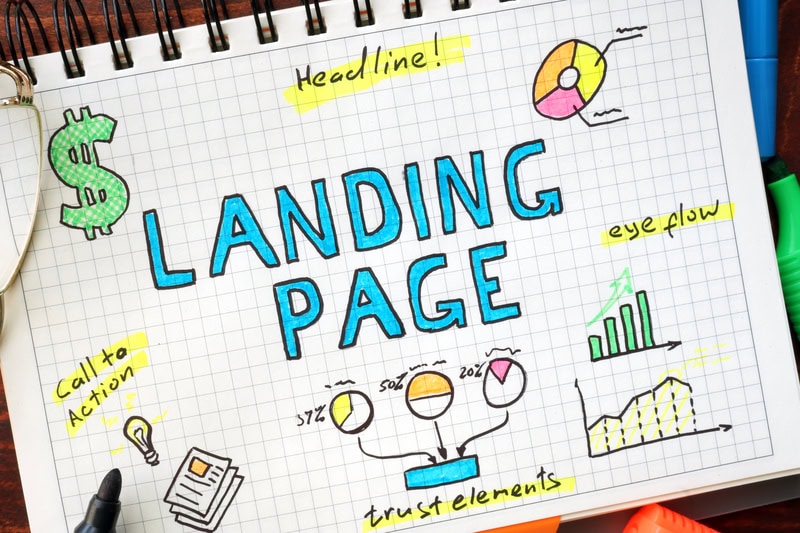


Most eCommerce sites don't fail because of bad products. They fail because the site itself is getting in the way. Across dozens of eCommerce audits, the pattern is consistent: the businesses that struggle aren't short on traffic - they're short on structure. One Denver outdoor retailer fixed their checkout flow and saw a 28% lift in conversion rate without touching their ad spend or adding a single product. Running a profitable eCommerce business - especially in a market like Denver and the Front Range, where local competition has tightened considerably - comes down to five things done well. This post covers what those five things are, and the mistakes we consistently see Colorado businesses make in each one.
A profitable eCommerce business combines high-quality product visuals, intuitive navigation, a clear unique value proposition, search-optimized content, and a paid media strategy that converts. Together, these five elements move visitors from browsing to buying and keep your customer acquisition cost in check.
Key Takeaways
- Bad product photos kill conversions before a visitor reads a word - fix these before anything else
- Navigation problems are the most common reason qualified visitors leave without buying
- Your unique value proposition needs to be above the fold, not buried in your About page
- SEO for eCommerce platforms takes 3-6 months to build, but the returns compound in a way paid ads don't - start now
- Retargeting is your highest-ROI paid ad spend; run it before you scale prospecting
01 - Photography Product Photography That Sells
Your photos have to do what a storefront can't - let customers examine a product without touching it.
Low-resolution or inconsistent product images hurt conversions before a visitor reads a single word of copy. As Shopify puts it, product photography directly influences the add-to-cart decision - because your images are your storefront when you can't be there in person.
What converts:
- Multiple angles: front, back, side, close-ups of key features or texture
- Lifestyle shots showing the product in use - especially important for apparel, home goods, and outdoor gear
- Consistent lighting and background across all listings (inconsistency signals low quality)
- Short video clips (15-30 seconds) for products where movement, scale, or assembly matters
You don't need a studio budget. A modern smartphone, a lightbox kit ($40-80 on Amazon), and a consistent white or neutral background get you most of the way there. What you can't do is cut corners on this step - one bad product photo undermines an otherwise well-built page.
We see this with Colorado clients regularly: a product page with strong copy and solid SEO still underperforms when the photography is inconsistent or dark. More common still - stores invest in paid traffic before fixing product imagery, which drives clicks but suppresses conversion rate across every campaign. Fix the photos before you invest in ads.
02 - Navigation Navigation That Gets Out of the Way
Confusing navigation is a direct conversion killer. If a visitor can't find what they want in two or three clicks, they leave - and most don't come back.
In the majority of eCommerce audits we run, the issue isn't traffic - it's category structure. Products are organized the way the business thinks about them, not the way customers search for them. A clothing store that organizes by brand when customers search by occasion is losing sales to its own navigation.
| Common navigation problem | Fix |
|---|---|
| Too many top-level menu items | Limit primary nav to 5-7 max |
| Vague category labels | Use the words your customers actually search |
| No site search | Add prominent search, especially for 50+ SKU stores |
| Filters buried below the fold | Surface product filters at the top of category pages |
| No breadcrumbs | Add breadcrumbs for multi-level categories |
The goal is a clear path from landing to checkout. Every extra click is a friction point. In Google Analytics, look at where users drop off in your conversion funnel - those pages are your highest-priority navigation fixes.
If you're selling locally or shipping primarily in Colorado, say so clearly in your navigation or hero section. "Free Denver delivery," "Colorado-made," or "Same-day pickup in Cherry Creek" are the kinds of signals that reduce hesitation for local buyers and reinforce your home-market advantage.
03 - Value Proposition A Clear Reason to Buy From You
Every profitable eCommerce business has a clear answer to the question every visitor asks: Why buy here instead of Amazon?
Your UVP doesn't need to be complicated. It needs to be specific and credible.
Strong UVPs we see working:
- Faster or more reliable shipping than major retailers (back it up with a delivery guarantee)
- Products made or sourced locally in Colorado
- A cause tied to each purchase - TOMS' one-for-one model is the benchmark example here
- Deep product expertise that makes your recommendations more trustworthy than a marketplace
Once you have it, your UVP needs to appear above the fold on your homepage and on every major product category page. Don't bury it in your About page - that's where it goes to die.
04 - SEO eCommerce SEO That Puts You In Front of Buyers
Search traffic is the most cost-effective long-term source of eCommerce revenue. Most eCommerce businesses treat SEO as a blog task - post occasionally, hope for traffic. That's why it rarely works. A profitable eCommerce SEO strategy is structural: it starts with how your category pages are built and how your site architecture distributes authority. The key word is long-term - SEO services for Denver businesses take 3-6 months to build momentum, but the returns compound over time in a way paid ads don't.
Core SEO priorities for eCommerce:
Keyword targeting by intent. Product pages target transactional keywords ("buy sustainable water bottle Denver"). Category pages target discovery terms ("eco-friendly kitchen products Colorado"). Don't use the same keyword on both.
One pattern we see repeatedly: eCommerce sites over-index product pages and under-build category page authority. The result is Google ranking competitors with fewer products but stronger category pages - because category pages carry more topical weight and earn more links. Build your category pages like landing pages, not just filter views.
Title tags and meta descriptions. Every page needs a unique title tag under 60 characters with the primary keyword near the front. Meta descriptions should be 140-155 characters and include a clear reason to click.
Technical health. Mobile-first indexing is the standard. Your site needs to load fast on phones - a 1-second delay in load time can reduce conversions by 7%, according to Portent's research on page speed. Run Google's PageSpeed Insights and address the red flags.
Fresh content. Each blog post or buyer's guide is an opportunity to rank for additional keywords and answer pre-purchase questions your buyers are asking on Google. Sites that publish regularly earn more indexed pages and more entry points into the funnel.
Internal linking. Connect related products, categories, and blog content. This distributes page authority and keeps visitors on your site longer. See our eCommerce SEO guide for how to build this out systematically.
If you're a Denver business targeting Colorado buyers, incorporate location-based terms naturally throughout your copy. Not stuffed in - placed where they read like a normal part of the sentence.
05 - Paid Ads Paid Ads to Accelerate What SEO Builds
Most Denver eCommerce businesses we talk to are spending on Google and Meta before they've set up retargeting. That's backwards. Start with retargeting - it's where your highest-ROI spend is - then scale to prospecting once you know your numbers.
SEO earns traffic over time. Paid search advertising and social ads get you in front of buyers today. Used together, they cover short-term revenue needs and long-term organic growth.
How to make paid ads work for eCommerce:
Test before you scale. Run small-budget A/B tests on ad copy, offers, and landing pages before committing to significant spend. A $500 test run tells you more than a guess.
Retargeting is your highest-ROI spend. Visitors who've already been to your site convert at 2-3x the rate of cold traffic. Retargeting campaigns should be running before you scale prospecting. If you're only running one type of paid campaign, make it retargeting.
A budget split that works well for most eCommerce businesses starting out: roughly 40% to retargeting, 40% to branded and shopping campaigns, and 20% to cold prospecting. Adjust as you gather data - but don't start with the 20% bucket and wonder why nothing converts.
Match ads to landing pages. If your ad says "20% off Denver orders," the landing page needs to confirm that immediately. Mismatched messaging is one of the most common causes of paid traffic that clicks but doesn't convert.
Use paid data to sharpen your SEO. The keywords that convert in paid campaigns are the ones worth building organic content around. Your Google Ads search terms report is a free keyword research tool.
Our approach to digital marketing in Denver combines paid and organic channels into a single strategy - so each investment supports the other rather than operating in a silo.
The Foundation Everything Sits On
None of the above works if your site is slow, broken on mobile, or has a checkout process with too many steps.
Before investing in photography, SEO, or ads, run a basic performance check - or better yet, a website conversion audit to find every friction point in one pass:
- Does your site load in under 3 seconds on mobile?
- Is checkout three steps or fewer?
- Are trust signals visible above the fold - reviews, return policy, secure payment indicators?
- Does your cart save across sessions?
These aren't optimizations. They're prerequisites. A Denver outdoor retailer we worked with improved their mobile checkout process and saw a 28% increase in conversion rate without changing any ads or adding a single new product. Fix the foundation before you build on top of it.
Frequently Asked Questions
A profitable eCommerce business converts a high percentage of its visitors into buyers. That comes from a combination of strong product visuals, clear navigation, a compelling unique value proposition, search visibility, and a checkout experience with minimal friction. Most underperforming businesses have problems in two or more of these areas.
It's table stakes at this point. More than 60% of eCommerce traffic comes from mobile devices, according to Statista. If your mobile experience is slow or hard to use, you're losing the majority of your potential customers before they reach your product pages.
Most eCommerce sites see measurable organic traffic growth 3-6 months after implementing a consistent SEO strategy. Competitive categories take longer. Local SEO for Denver-area terms tends to move faster than national keyword targets.
Most abandonment happens before the customer even sees the shipping cost - forced account creation is the single biggest exit point in checkout. Address that first: offer guest checkout. Then tackle unexpected shipping costs and multi-step checkout. Add trust signals (security badges, return policy) near the checkout button. A simple 3-email cart abandonment sequence - sent at 1 hour, 24 hours, and 72 hours - typically recovers 5-10% of abandoned carts with minimal setup.
Both can work, but they serve different purposes. Google Ads targets people who are actively searching for what you sell - high intent, higher cost. Facebook and Instagram ads are better for building awareness and retargeting people who've visited your site. For most eCommerce businesses, Google Shopping campaigns and retargeting on Meta are the best starting point.
Start with why your current customers chose you. Survey them or look at your reviews - what do people cite as the reason they bought from you instead of a competitor? That's usually your UVP. If the answers are vague, you may need to make a more deliberate choice about what you want to compete on: price, speed, expertise, sustainability, or local connection.
The average eCommerce conversion rate across industries is around 1-2%, according to IRP Commerce's current market data, though top performers in categories like arts and crafts reach 4-5%. That number varies widely by category, traffic source, and device type. Mobile conversion rates are typically lower than desktop. If you're below 1%, site usability issues are almost certainly involved.
Ready to Build a More Profitable eCommerce Business?
If you're not sure where your eCommerce business is losing customers, Creative Options Marketing can help you identify the gaps. We're a Denver-based agency with experience in eCommerce SEO, paid search, and conversion optimization - and we've been doing this since 2009.
Talk to us about your eCommerce siteNo obligation. Just a straight conversation about what's holding your store back.
David Drewitz is the founder of Creative Options Marketing, a full-service digital marketing agency based in Denver, Colorado. He has 30 years of marketing experience and has managed SEO, paid media, and conversion optimization for eCommerce businesses across Colorado and beyond since 2009. Connect with David on LinkedIn.